
Autumn can be one of the best times of year to go hiking. During the summer months it’s simply too hot, especially this year where it must be about 2 months since we last saw rain in the UK! In the Winter it can be a bit nippy, making it hard to pick the right clothing as you start cold and end up sweaty in your big puffer jacket.
In either Autumn or Spring, you have this ideal middleground, where you won’t overheat in the right clothing, embracing that cooler breeze. Plus it also means you can bring the dogs along with you, as they’ve sadly been limited to 6:30am and 9pm walks so far this summer.
So the real difficult part around Autumn hiking is deciding what to wear.
An autumn walk can begin on a cold morning (we’re still in England at the end of the day), become surprisingly warm once you start climbing and then turn wet or windy without much warning.
The answer is not simply to wear the thickest coat you own, I used to make that mistake regularly and be left lugging it around. A better option is to build an outfit from separate layers, allowing you to adjust what you are wearing as the conditions change (while also carrying a bag to store it in).
Why Layering Is So Important For Autumn Hiking
Layering gives you far more control over your temperature than wearing one heavy jumper or a thick jacket.
Most autumn hiking outfits can be divided into three parts:
- A base layer worn close against the skin
- A midlayer that provides warmth
- An outer layer that protects you from rain and wind
Each layer has a separate job to do. The base layer deals with sweat (because it’s a bit embarrassing when those patches form), the midlayer helps retain warmth and the outer jacket protects everything underneath it.
You may need all three when starting a walk on a cold morning. Once you begin moving uphill (bring on Ditchling Beacon), you might open the zip on your midlayer or remove the jacket. When rain arrives (if it ever will, not sure when that day will come), the waterproof outer layer can go back on without forcing you to wear a heavily insulated coat. I’d say a good waterproof option is almost an essential in the UK.
This also makes it easier to dress for the trek you’ve planned out rather than just the weather outside your front door. A sheltered woodland path with trees covering your head from the sun may feel mild, while an exposed section higher up can be colder and much windier.
Picking A Pertinent Base Layer
For a nice, mild autumn day, a lightweight T-shirt may be enough, it’s often my go-to option, nothing shiny or expensive. On colder days, a fitted long sleeved top can provide extra warmth without adding too much bulk beneath your other clothing.
Merino wool and synthetic technical fabrics are commonly used because they are designed to manage moisture and dry faster than ordinary cotton. A cotton T-shirt may feel comfortable at the beginning of a walk, but it can absorb sweat and remain damp once your body temperature drops.
The base layer should sit reasonably close to the body without feeling restrictive. A very loose top may bunch beneath the half-zip, while something too tight could make movement uncomfortable.
Colour is less important if the layer will remain covered, although when you get to the pub at the end of your hike, remember you’ll be taking off your jacket, so you don’t want something bizarre, creased or just a bit unpresentable.
Choosing An Autumn Hiking Midlayer
The midlayer is responsible for providing warmth while still allowing you to move comfortably.
It should be light enough to wear beneath a waterproof jacket and flexible enough for climbing, bending and carrying a backpack. Being able to release heat without removing it completely is also useful during autumn, when conditions can change throughout the walk.
Men’s Tyri Half-Zip
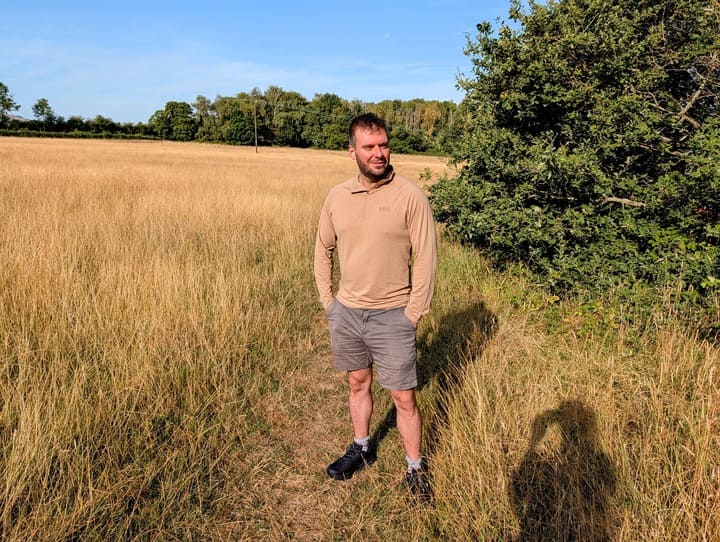 The Men’s Tyri Half-Zip costs £70 and is available in seven colours. I selected elmwood, which is a sandy beige as I think it looks absolutely stunning, this is something I’d happily wear on a normal work day and not just for a trek.
Helly Hansen describes the Tyri as suitable for hiking, camping and trail running, maybe I should give trail running a go next! It can be worn as a midlayer throughout the year or used as an outer layer during warmer weather. I personally think it can be used as a base layer as well, so it really is quite flexible in its usage.
Its main feature is the four way stretch fabric. This allows the material to move in several directions, rather than pulling tightly when you raise your arms or reach across your body. That should be useful when climbing over uneven ground, adjusting a rucksack or using walking poles (never tried them, but one day I’ll give them a go).
The raglan sleeve design also supports movement around the shoulders. Instead of having a traditional seam sitting directly on top of the shoulder, the sleeve extends towards the collar. This can create a more relaxed fit and may reduce pressure beneath backpack straps.
The half zip makes it easier to regulate your temperature. You can keep it fully closed at the start of a cold walk, then open it once you become warmer. The chin guard helps prevent the top of the zip from rubbing against your skin when the collar is fully raised.
Other details include a YKK zip, an internal hanging loop and a raised Helly Hansen logo. The logo is the same general colour as the fabric, making it much less prominent than a bright printed design.
The Tyri is also listed as a bluesign product. This refers to standards covering chemicals, resources and manufacturing processes within textile production. I would not describe an entire garment as sustainable based on one certification, but it is still useful to see greater attention given to how clothing is produced.
How To Style The Elmwood Colour
Elmwood is one of the strongest parts of this outfit from a style point of view, I love the look.
The colour sits somewhere between beige, sand and light brown. It feels suitable for autumn without relying on the predictable purple or burgundy shades that often appear in seasonal clothing collections.
It also combines well with darker colours. Navy gives it a smarter appearance (if you have some navy shorts to partner it with), black provides a strong contrast and olive makes the overall outfit feel more outdoors appearing.
For the full outfit, black walking trousers would be the easiest choice, but I’m trying to wear shorts until the last day possible, you may see me in them until December.
Dark olive trousers would also work, although they would create a more traditional hiking appearance. Navy trousers could be an option, but wearing them with the navy jacket may make the outfit feel too dark and too closely matched.
The cut of the Tyri is fairly simple, so it could also be worn away from a hiking trail. It would work with dark jeans, casual trousers or shorts during milder weather. The restrained branding helps it look more like an everyday half-zip than dedicated sportswear.
Picking A Waterproof Autumn Jacket
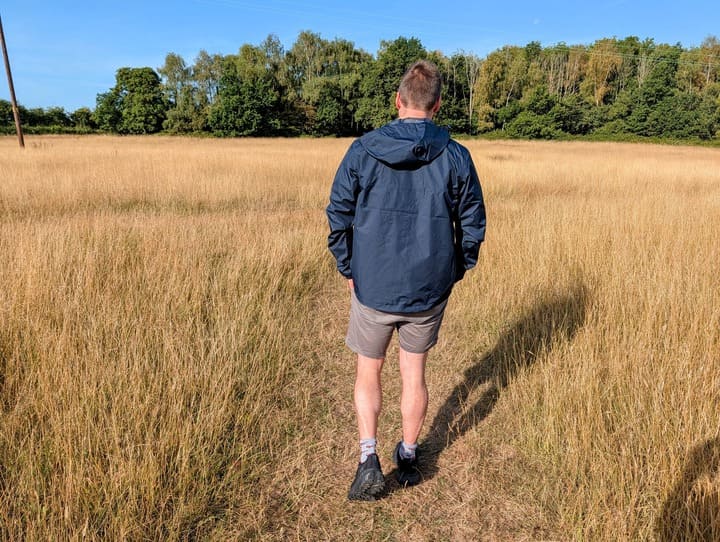 A waterproof jacket doesn’t have to be a big warm jacket.
A rain shell is mainly designed to keep water and wind away from the clothing underneath it. It may provide some warmth by reducing exposure, but it should not be treated as a replacement for a midlayer on a cold day.
This is why the Tyri and Vancouver work well together. The half-zip provides warmth, while the jacket forms the protective outer layer.
Men’s Vancouver Rain Jacket
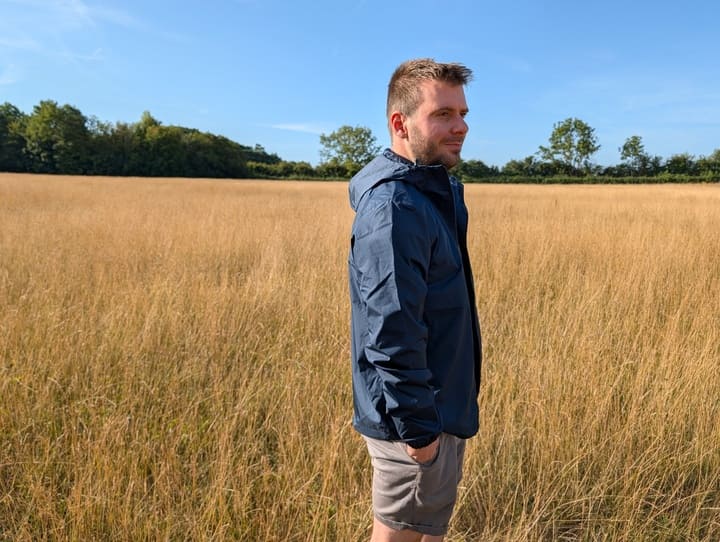 The Men’s Vancouver Rain Jacket costs £125 and is available in seven colours. I chose navy, which works well with both the elmwood midlayer and the black footwear.
Helly Hansen advertises the Vancouver as an all day rain jacket that can be used for commuting, local walks, trips near the sea and hiking.
It uses HELLY TECH Protection, Helly Hansen’s waterproof and breathable fabric system. Breathable does not mean you will never feel hot while walking uphill, but it is designed to let some internal moisture escape while preventing rain from entering. I just love how easily I can fold it up and put it into my rucksack or even carry it around as it really doesn’t weigh much, ideal when the weather is unpredictable (hello England).
The jacket has a two layer construction. In simple terms, the outer fabric and waterproof membrane are combined, with an inner layer protecting the membrane from direct contact and regular wear.
Helly Hansen’s overview describes full seam sealing, while the feature list states that the jacket is critically taped. Taping is used to stop water passing through the tiny holes created during stitching. As the wording supplied by the brand differs, I would avoid making a more specific claim until checking the label or testing the jacket in sustained rain.
The adjustable hood should help keep rain away from the face, while the adjustable bottom hem can be tightened to reduce wind entering from underneath. It can also improve the shape of the jacket if the standard fit feels slightly loose.
Elastic cuffs offer a simple fit around the wrists. They are quicker than adjustable straps, although they provide less control over how tightly each sleeve closes.
The hand pockets have secure zip closures, which is useful when carrying a phone, keys or wallet. One detail to check when walking with a backpack is whether the straps sit across the pocket openings and make them harder to reach.
The main YKK VISLON zip uses moulded plastic ‘teeth’. This type of zip is often chosen for outdoor clothing because it is durable and less affected by moisture than a traditional metal zip.
Why Navy Works Well In My Eyes
Navy is a great colour for a rain jacket because it really does partner with other colours so easily, it can look casual and yet work with different outdoor equipment.
It looks less immense as a black option, but is still dark enough to hide small dirt marks, I mean I have a habit of dropping food down myself, so this is an underrated factor. It can fashionably be worn with grey, beige, black, olive, denim and most neutral colours.
The navy Vancouver also creates a good contrast with the elmwood half-zip underneath. When the jacket is left open, the sandy colour breaks up the darker outer layer. When the jacket is fully closed, it looks smart enough for commuting to work.
A brighter rain jacket may provide greater visibility in poor conditions, which is something to consider on exposed routes or near roads, but I’m often not a fan of the brighton orange you sometimes see, I don’t want to look like a traffic light or a warning sign. For everyday wear, navy is one of the easiest colours to go for.
Choosing Autumn Hiking Footwear
As with the other items on this list, your shoes should be chosen based on the trek rather than just the appearance alone, as much as you might want to pick your fave kickers.
A flat woodland walk has different requirements from a rocky mountain trail, as I’ve learned the hard way numerous times. Distance, mud, rain, steep descents and ankle support should all influence the choice.
The AWE Hiker is a low hiking shoe rather than a full walking boot. This gives it the appearance and flexibility of a trail trainer, while still including features aimed at wet and uneven conditions.
Men’s AWE Hiker HELLY TECH Shoes
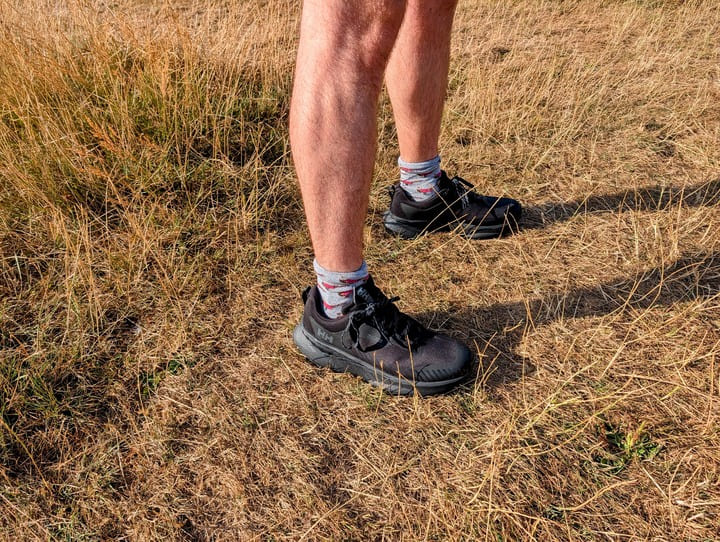 The Men’s AWE Hiker HELLY TECH Shoes cost £135 and are available in four colours. I selected black, making them the easiest part of the outfit to match with different trousers. I know I should be more adventurous, but I just love a black or white pair of shoes, they become so versatile with anything else you want to wear.
Helly Hansen designed the shoes for day hikes across easy paths and mixed trails. They include the company’s waterproof membrane, trail grip outsole and cushioned foam midsole.
To keep your feet dry in the rain, they have introduced the HELLY TECH waterproof membrane. The shoes still have a low collar, so water can enter from above if you step into deep water or if rain runs down your legs.
The HH Trail Grip outsole is designed to provide traction across different surfaces. Autumn conditions should offer a good test, particularly on wet leaves, loose gravel, damp stone and muddy ground.
HH Surround-Grip appears to focus on grip around a wider area of the sole, helping the foot feel more secure when landing at different angles. The real test will be how stable the shoes feel on uneven paths and sloping ground.
HH Pro Guard adds protection around areas of the upper that may come into contact with stones, roots and rough surfaces. The reinforced toe area is particularly useful when walking on rocky routes.
The HH Fast foam midsole is designed to offer cushioning and energy return. In practical terms, this should help the shoe feel less hard during long periods of walking. Comfort during the first few minutes is not enough, so it will be useful to assess how the cushioning feels after one or two hours.
The padded collar should reduce rubbing around the heel and ankle. It will also be worth checking whether the heel stays firmly in place, as movement inside the shoe can lead to blisters.
Several parts of the shoe use recycled materials, including the laces, polyester webbing, lining and Strobel construction. The Strobel is the fabric section beneath the foot that connects the upper part of the shoe to the sole.
Styling Black Hiking Shoes
Black was the safest choice for this outfit, but it does not make the shoes boring.
The thick sole and textured upper give them a clear outdoor appearance, while the single colour prevents them from dominating the outfit. They should work with black, charcoal, navy or olive hiking trousers.
A straight or gently tapered trouser shape will probably suit them better than extremely skinny trousers. The shoes have a substantial sole, so very narrow trousers could make the proportions look unbalanced.
For casual use away from hiking, they could be worn with dark jeans, cargo trousers or technical joggers. They are clearly more rugged than ordinary black trainers, but the restrained colour makes them easier to wear around town.
What Trousers Should Men Wear Hiking In Autumn?
Your ideal walking trousers should allow movement, dry reasonably quickly and remain comfortable if the weather changes.
Technical hiking trousers are the most practical option. Look for stretch around the knees and thighs, secure pockets and enough room to move without the material becoming baggy.
Black or charcoal would work best with the three Helly Hansen pieces. Dark colours also hide mud and splashes better than beige or stone.
Jeans may be acceptable for a short walk in dry conditions, but denim becomes heavy and slow to dry when wet. Ordinary cotton joggers have a similar problem, even though they may feel comfortable at the beginning.
Technical walking joggers can offer a good middle ground. They have the relaxed shape of casual clothing but use fabrics better suited to movement and damp weather.
Waterproof overtrousers are also worth packing when prolonged rain is forecast. A waterproof jacket and waterproof shoes will not keep the entire outfit dry if the trousers become soaked.
Autumn Hiking Accessories
Walking socks should be chosen as carefully as the shoes. They should provide some cushioning, sit above the shoe collar and manage moisture during longer walks. Carrying a spare dry pair takes up very little room and can make the journey home more comfortable.
A small backpack should have enough space for water, food, removed layers, a hat, gloves and waterproof trousers. It is also worth checking whether the straps affect the fit of the Tyri around the shoulders or block access to the Vancouver’s pockets.
A lightweight beanie and thin gloves can be useful during colder mornings or when stopping for a break. They are easy to remove and take up little space when not needed.
Low autumn sunlight can be surprisingly bright, so sunglasses may still be useful. A cap can also help with both sunlight and light rain, provided it fits comfortably beneath the jacket hood.
Always check the weather forecast before leaving the house as you just know you’re going to get caught in the rain. Conditions can be different on higher or more exposed ground, and daylight begins to disappear much earlier as autumn progresses.
